Assessments: EQ-i 2.0®
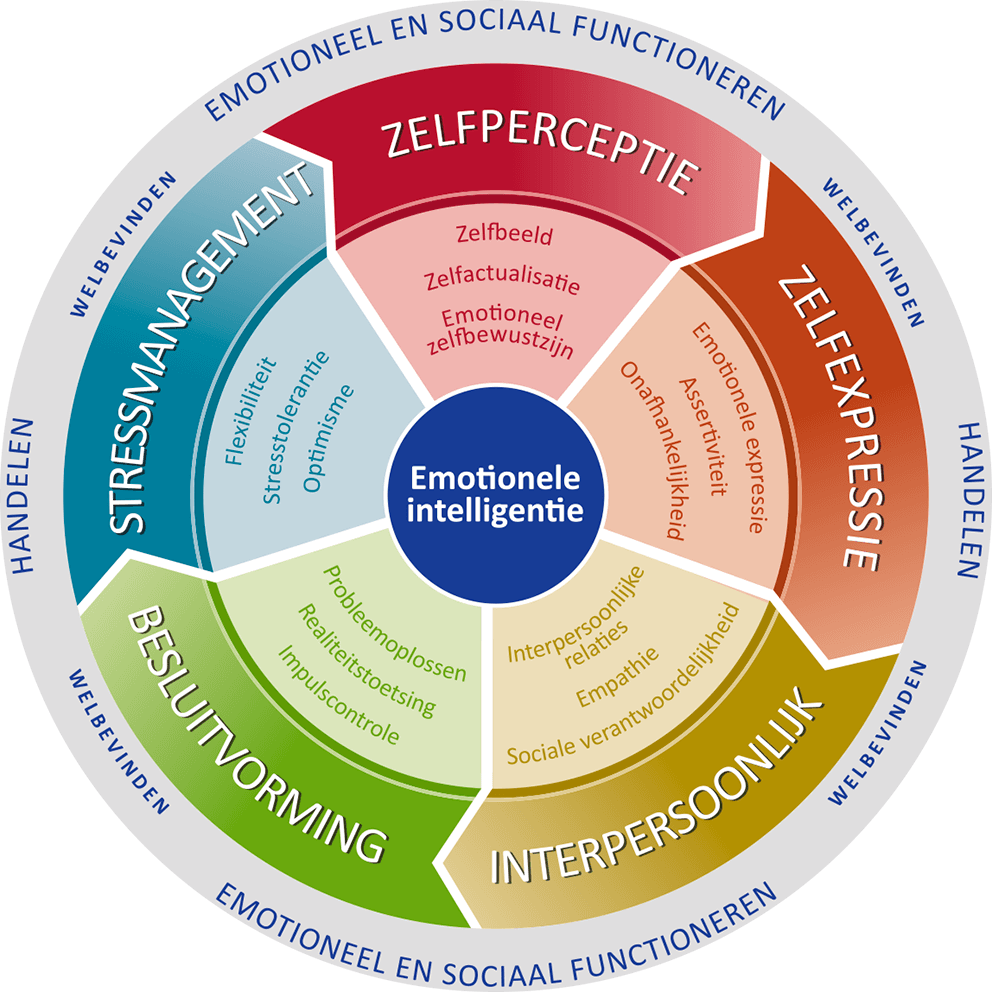
Someone with a high IQ can feel they are not happy in life, while others with a lower IQ are happy. That difference has to do with a person's emotional intelligence, the EQ. Scientific research shows that a well-developed EQ offers a greater chance of a successful life than a high IQ. With the assessments of the EQ-i 2.0® you can measure your emotional intelligence. You can choose from several assessments. Besides awareness, it provides direction, a plan of approach with your coach and an anchoring of your development.
In different languages available!
It's possible to fill in the EQ-i 2.0 Emotional Intelligence assessment in for example English, French, German, Spanish e.g.
I am Valérie Docters van Leeuwen and I have worked since 2006 as a (certified) coach EMCC/EIA and, since 2023, internationally as a coach supervisor ESIA for practitioners in the helping professions. What are you creating in your life? Contact me for your next step as a professional.
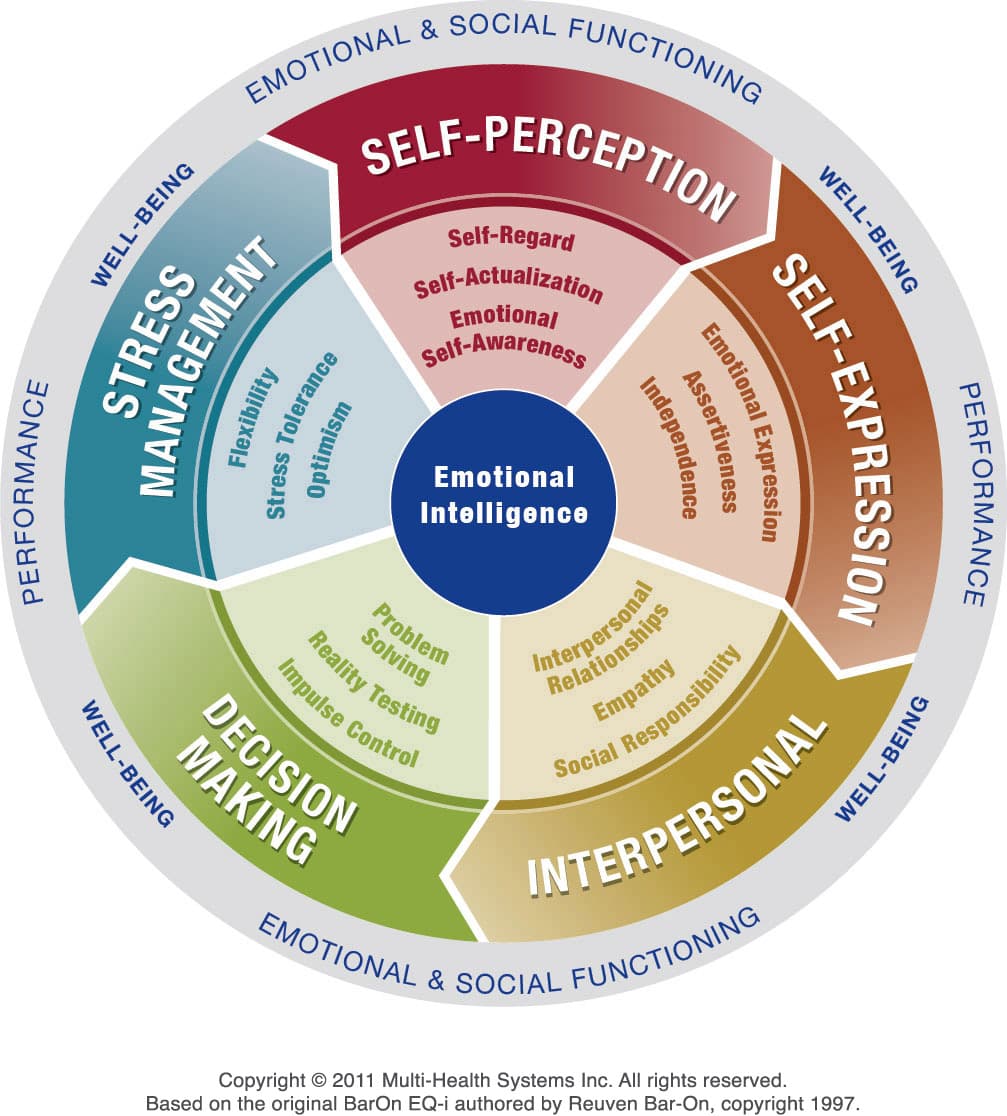
The EQ-i was the first test to measure emotional intelligence and is still regarded as the most reliable.
View the reliability and validity here
View the various sample reports here
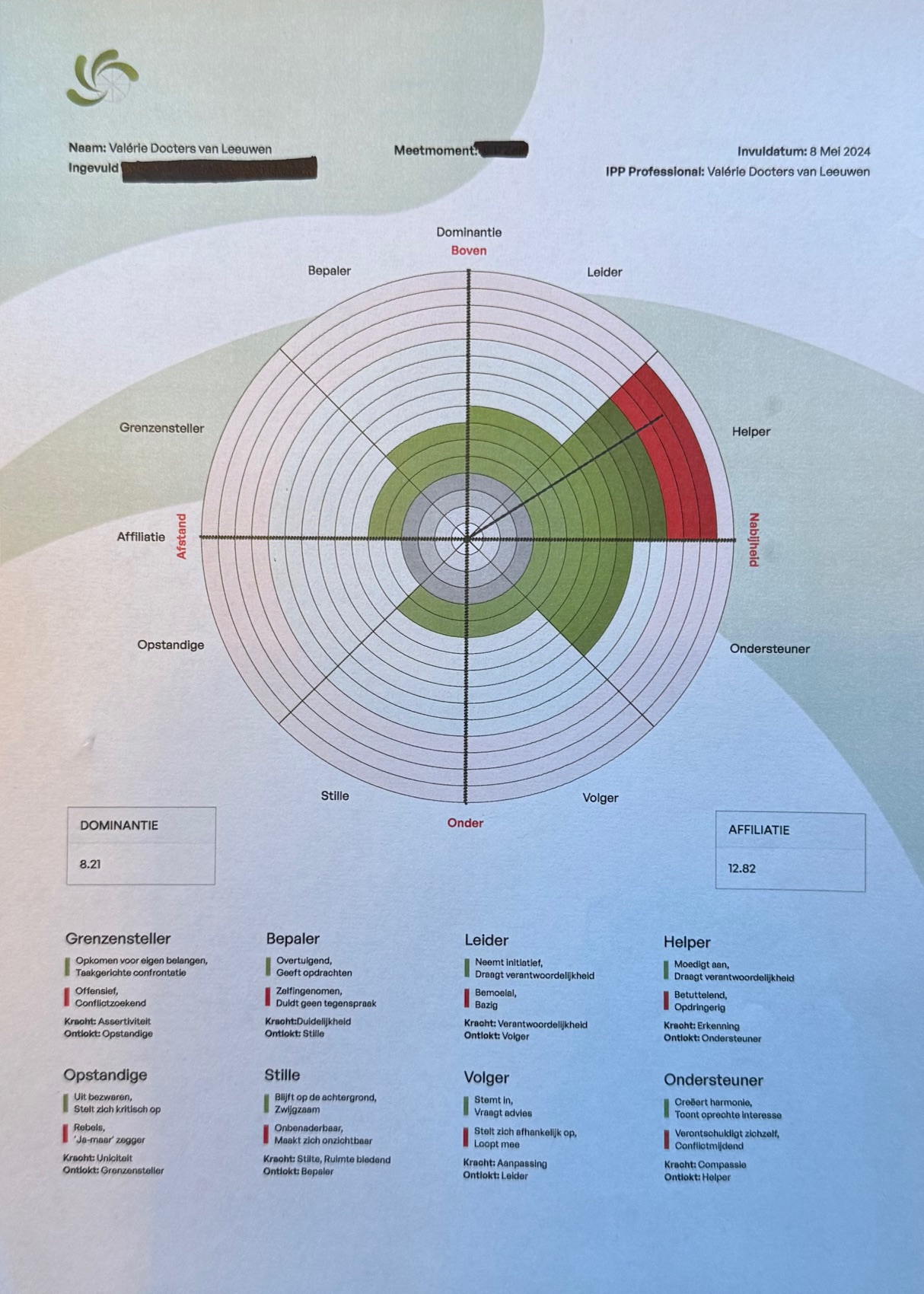
The Interpersonal Profile (IPP) ® test Leary's Rose
Dr Timothy Leary was a psychologist who developed the world-famous Leary's Rose.
He is known for his work with and under the influence of LSD. An English psychiatrist told me that because of this, his entire and extensive body of work is hardly used. In the Netherlands, fortunately, this is different. His legendary interaction model, the Leary's Rose, is known among managers, trainers, coaches and students alike. A century later it is still widely used. He shows, very recognisably, the different communication (or 'interaction') styles that we all use to a greater or lesser degree. Which behaviour do you tend to show, which less or not at all?
The unique (only in the Netherlands!) validated behavioural analysis measures the individual's interpersonal skills. This makes the intention, effect and intensity of behaviour visible. Where does it tip over and does effective behaviour (green) turn red? Is 'helping', for example, experienced as 'patronising'? Or 'rebellious behaviour', which at its core holds a critical spirit that wants to protect the team from poor end results? The strength of this model is that it is both practically applicable and in-depth. For (project) teams too it offers many possibilities for mapping communication and potential frictions.
As one of the first practitioners in the Netherlands, I followed the pilot masterclass at the Leary Academy and am an IPP Licensed Practitioner of the validated Interpersonal Profile® or Leary's Rose Assessment. A clear overview of the eight communication styles, with a vector as an additional indication of the preferred style. For the price of one, three peers can complete the test for the coachee, creating a 360°. Very interesting and illuminating!
For communication questions I work with a rug and tiles specially developed by the Leary Academy, so that you can physically walk through the model. For online conversations you receive tools to do this at home. In leadership journeys, a training actor is often used. Even very experienced leaders learn to recognise their pitfalls this way: both physically and online.
The Art of People works with Kapok, a national agency specialised in deploying top actors and familiar with leadership and communication questions.
Call or email for more information!
Example Interpersonal Profile (IPP) Leary's Rose