Inspiration
For inspiration, a few sources to learn more about emotions and emotional intelligence. There is much more to read, but here is a selection. This page will be filled out further with books on coaching, leadership, emotional intelligence, communication and team dynamics.
Some books offer practical tips, an approach and/or scientific background. Topics such as 'how to learn to deal with (overwhelming) emotions', but also scientific literature, written for a broad audience, such as that of the leading Dutch scientist Frans de Waal on 'empathy'.
Permission to feel
I am always looking for other professionals who tell an honest story about learning to feel. Or really, going back to what we were forced to leave behind in order to survive in the adult world. Marc Brackett is one such person. 'Permission to feel' and the new app are set up in such a way that they offer many people an entry point to their own feelings.
Empathy
One of the founders of the School of Life (Roman Krznaric) has written an accessible and timely book on the importance of 'empathy'. Martin E.P. Seligman is the founder of positive psychology. His book is a little older now, but alongside scientific grounding it offers a step-by-step plan to get started yourself. Barbara L. Fredrickson took positive psychology further. Martin Seligman, former president of the American Psychological Association, says of her: he calls her "the genius of the positive psychology movement". Nico Frijda is a Dutch psychologist who wrote the groundbreaking standard work 'The Laws of Emotion'. Demanding to read, but very interesting for those, including young psychologists, who love depth.
Emotional intelligence
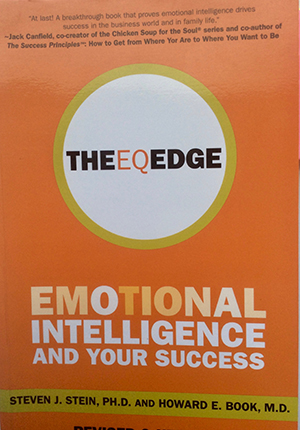
Daniel Goleman made the concept of 'emotional intelligence' accessible to a wider audience. Its originators were Salovey and Mayer. Goleman still publishes regularly. This is one of his books. Steven J. Stein is a clinical psychologist, CEO and founder of MHS (Multi-Health Systems), and developer of the EQ-i. He wrote (not shown here) the book 'Emotional Intelligence for Dummies', which has been translated into Dutch.
The art of conscious living
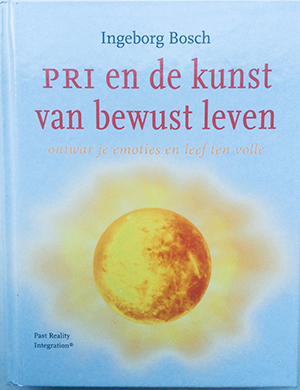
The Dutch psychologist Ingeborg Bosch built on the work of Alice Miller ('The Drama of the Gifted Child') and shows that we have developed patterns out of the past. Without pointing a finger at caregivers, she does show how unfulfilled needs can still have an effect in the here and now, and how we can recognise the stifling patterns and survival mechanisms. Bosch developed Past Reality Integration. Among other things she wrote 'PRI and the art of conscious living', which offers a practical handle for tackling patterns.
Happy reading and learning!