
Emotional intelligence (E.I.) and competencies
Emotional intelligence is a set of emotional and social skills. This set influences how we experience and express ourselves, how we develop and maintain our social relationships, deal with challenges, stay resilient and how we process sensitive information and apply it effectively. But the foundation is being able to feel. Learning to recognise emotions and feelings and how they build up, and to use them more consciously in relation to yourself, others and your work. This is called 'emotion management'. It may sound more clinical than it really is. For a long time we were taught that we have to control our emotions. But being able to feel them through is far more essential. Take the step. WhatsApp or email me: Let's get started!
Why is emotional intelligence so important?
Emotional intelligence is a proven key indicator for our performance and development. People with a more highly developed E.I. are strong in relationships and create powerful coping strategies.
The EQ-i 2.0 model
The features of the EQ-i 2.0 model:
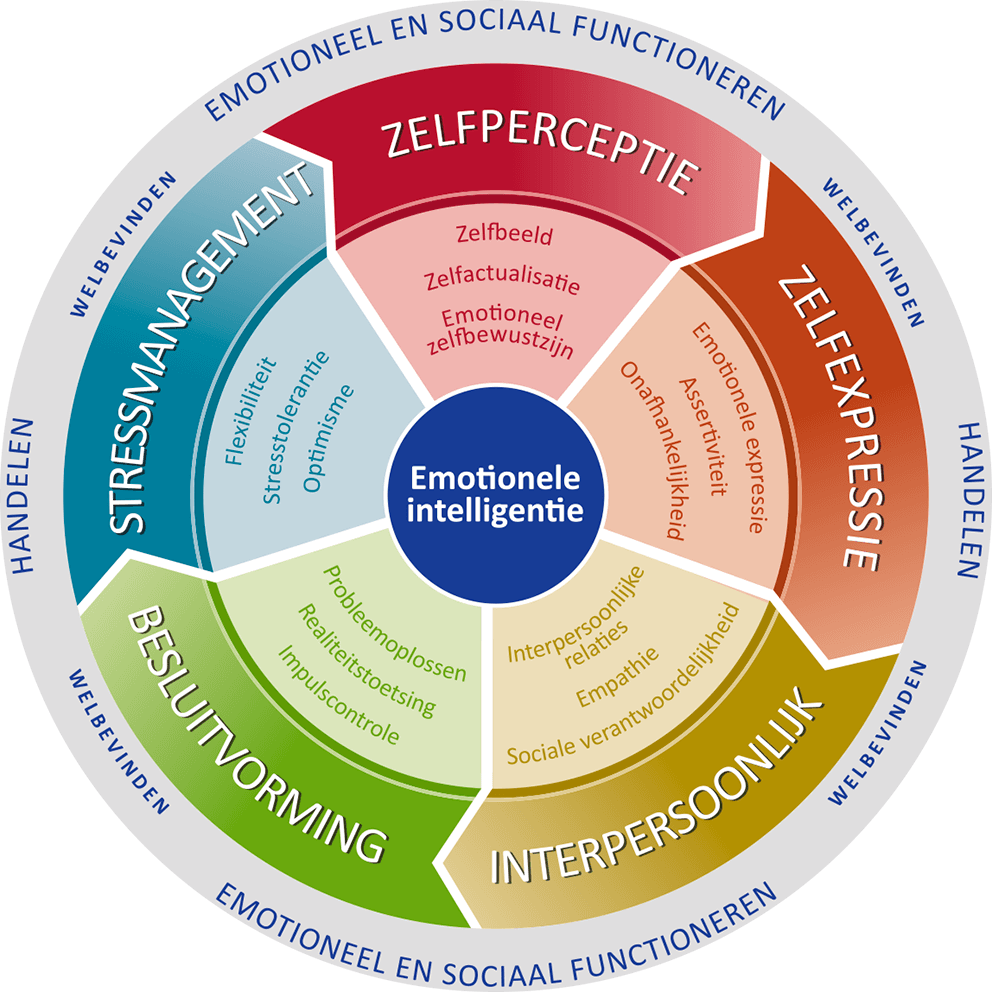
- Self-perception Am I realistic about how I see myself?
- Self-expression How do I express my emotions?
- Interpersonal How do I relate to others?
- Decision making How can I make clear decisions in times of stress?
- Stress management How do I deal with heavy emotions in times of stress?
* In the Netherlands the Dutch-language test was developed in collaboration with professor dr. Jan Derksen (associate professor at Radboud University Nijmegen and also professor at the VU Brussels).
The Bar-On EQ-i was introduced in Canada in 1997 by MHS, and in NL/B/D by PEN Psychodiagnostics (under licence from MHS) in 1999. The EQ-i 2.0 has been operational since 2017. The test is now published by the largest publisher in the world: Pearson Clinical Assessments.